Snowman Sled Skiing: A Designer’s Review for Craft Fair Sellers
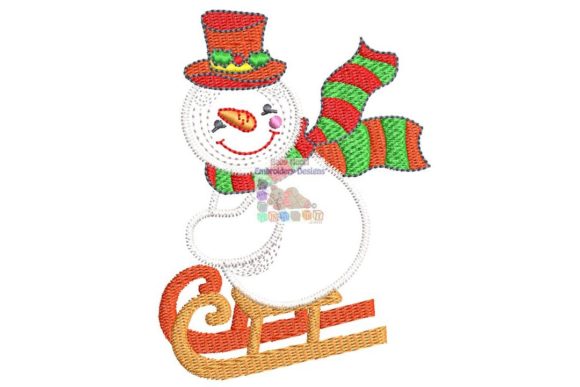
When I first opened the Snowman Sled Skiing embroidery file, I was immediately struck by its sense of motion and playful spirit. This is not a static, posed snowman meant to sit politely on a shelf. This snowman is mid-adventure—leaning into a downhill sled run with a scarf trailing behind. As someone who prepares dozens of machine embroidery design samples for weekend craft fairs, I can tell you that movement in a design translates directly into visual interest. Shoppers walking past a booth are drawn to action, and Snowman Sled Skiing delivers exactly that. It feels festive without being overly precious, and it has a light, modern energy that works for both traditional Christmas shoppers and those looking for something a little more playful.
In this review, I will walk through how this embroidery file performs across the products I typically bring to markets: tote bags, aprons, tea towels, embroidered patches, caps, fabric pouches, pillow covers, market bags, and giftable handmade items. I will also share practical notes on stitch density, thread contrast, hoop size, stabilizer choices, and how to photograph your finished pieces for online listings. Whether you are an Etsy seller building a holiday collection or a small shop product maker preparing a booth, this review is meant to help you decide if Snowman Sled Skiing deserves a spot in your production lineup.
First Impressions: Bold, Cute, and Full of Movement
The first thing I noticed about Snowman Sled Skiing is how well the action reads at a glance. The snowman is tilted forward, arms outstretched, with a sled beneath and a scarf streaming behind. There is no confusion about what is happening. That instant readability is gold for a craft fair product. When a customer glances at your booth from ten feet away, they need to register the design in under two seconds. This design passes that test easily. It is bold enough to catch the eye, yet the details—like the sled runners and the scarf folds—add charm without cluttering the silhouette.
The mood is upbeat and slightly adventurous. It is not a farmhouse-style snowman with muted tones and rustic textures. It is brighter, more animated, and feels like it belongs on a child’s winter sweater or a playful kitchen towel. That said, the design has enough structure to work on adult apparel too, especially if you choose thread colors that lean toward classic red, white, and grey. I recommend testing it on a dark navy or forest green background—the contrast makes the snowman pop and gives the piece a more premium feel.
Best Products for Snowman Sled Skiing at Your Booth
After stitching several test samples, I can confidently say that Snowman Sled Skiing performs best on mid-weight fabrics with a stable surface. Here are the products I recommend for your handmade product lineup:
- Tote bag design: This is where the design truly shines. A standard 10x10 inch tote bag provides enough room to show the full sled and scarf motion. Place the design slightly off-center for a modern look, or center it for a classic tote. Customers at craft fairs love a seasonal tote they can use for grocery runs or gift carrying.
- Apron embroidery: A full apron front is another excellent canvas. The horizontal motion of the sled works well across the chest area of an apron. I stitched one on a grey linen apron with red thread accents, and it sold within an hour of the booth opening.
- Tea towel embroidery: Tea towels are a staple for commercial embroidery sellers, and Snowman Sled Skiing fits nicely on a standard tea towel half-fold. Just be mindful of the fabric texture—terry or thick looped towels can bury fine details. Stick to flat-woven cotton or linen towels for the cleanest result.
- Embroidered patch: This design would make an excellent iron-on or sew-on patch for jackets, backpacks, or stocking caps. Because the design has a clear outline, it digitizes well for patch production. You can sell patches individually or stitch them onto blank beanies for a quick, high-margin product.
- Fabric pouches and small zipper bags: At a smaller size, the design works as a focal accent on pouches. Just confirm the hoop size needed for the smallest viable version—if the sled runners become too thin, the design may lose clarity.
- Pillow covers: A throw pillow with Snowman Sled Skiing stitched on the front makes a great gift item. Use a 12x12 or 14x14 inch pillow form and center the design. The playful action adds a conversation starter to any living room.
I also tested the design on a curved cap surface, and while it is possible, I would caution that the sled’s horizontal line may warp on a high crown. If you want to offer caps, consider a flat-brim or snapback style with a less curved front panel. For market bags and reusable grocery totes, the design is a natural fit—especially if you are targeting eco-conscious shoppers who want a festive but functional bag.
Selling Strength: What Makes Customers Stop and Look
In my experience, the designs that sell best at craft fairs are the ones that trigger an emotional reaction quickly. Snowman Sled Skiing does this by combining nostalgia with action. Everyone remembers sledding as a kid, and a snowman doing it adds a layer of whimsy. I noticed that customers with young children were especially drawn to it—they could imagine the design on a holiday sweater or a lunch bag.
From a design assets perspective, the color palette is flexible. If you stitch it in bright red, white, and black, it reads as classic Christmas. If you swap the red for teal or mustard, it takes on a more modern, Scandinavian feel. That versatility is important for digital embroidery file sellers who want to appeal to a range of tastes. For my own booth, I created three samples: a red-and-white version on a natural tote, a navy-and-white version on a grey apron, and a full-color version with a blue sled on a cream pillow cover. The navy version drew the most compliments from men and women alike.
The design also photographs beautifully. When I posted a printable mockup on my Etsy listing, I used a lifestyle photo of the tote hanging on a hook with a winter coat. The movement in the design made the photo feel alive. If you are an Etsy seller, I strongly recommend using a real stitched sample for your main listing image rather than a digital render. Buyers can tell the difference, and the texture of real thread on fabric builds trust.
Practical Production Notes for Batch Embroidery
Before you stitch fifty units for your next fair, there are a few technical points to verify. First, check the stitch density. If the design has dense fill areas, especially in the snowman’s body or the sled, you will need a strong stabilizer. I recommend a tear-away stabilizer for most woven fabrics and a cut-away for knits or stretchy materials. The scarf and sled details may have narrow stitch angles that require careful hoop size alignment—hoop the fabric taut but not stretched to avoid distortion.
Second, test thread colors on your actual fabric before committing to bulk production. White thread on white fabric may disappear, so consider a grey or light blue outline for the snowman if the background is pale. Conversely, on dark fabric, white pops beautifully but make sure the underlay is dense enough to prevent fabric show-through. I always stitch a test sample on scrap fabric and hold it at arm’s length to check how the design reads from a distance.
Third, be aware of tiny details that may not scale well. If you plan to reduce the design for small pouches or caps, check that the sled runners and scarf ends are still visible. Some machine embroidery design files lose definition below a certain size. If the original file was digitized for a 5x7 inch hoop, shrinking it to 3x3 may cause thread breaks or muddiness. Always confirm the recommended hoop size and minimum dimensions before offering smaller products.
Finally, verify the commercial embroidery license terms for Snowman Sled Skiing. If you are selling finished products, ensure the license allows for that. Many digital embroidery file designers include a commercial use option, but terms vary. I always keep a copy of the license in my business files and include a note in my Etsy shop policies crediting the designer. This protects you and respects the original creator.
Photography and Listing Tips for Etsy Sellers
When I photograph my handmade product samples for online listings, I use natural light and a neutral background. For Snowman Sled Skiing, I suggest staging the product in a context that suggests winter fun—a wooden table with a mug of hot cocoa, or a coat rack with a scarf nearby. The design’s motion makes it ideal for slightly angled shots rather than flat lays. Show the product being held or worn if possible.
For printable mockup templates, you can overlay the design onto a tote or apron photo, but again, a real stitched sample is far more convincing. I have seen too many Etsy listings where the mockup looks perfect but the actual embroidery disappoints. Build trust by showing the real thread texture, the fabric weave, and the back of the design (to prove quality finishing). Buyers appreciate transparency.
Also, include a size reference in your listing photos. Place the embroidered item next to a ruler or a common object like a coffee mug. Customers often underestimate or overestimate design dimensions, and a clear visual helps set expectations. In the description, mention the stitch count, number of thread colors, and recommended hoop size—even if these are approximate. That information signals professionalism to both casual shoppers and wholesale buyers.
Final Verdict: Is Snowman Sled Skiing Booth-Ready?
After testing Snowman Sled Skiing across multiple products and fabric types, I can say it is a strong addition to any holiday embroidery lineup. It reads well at a distance, works on a variety of surfaces, and appeals to a broad customer base. The action-oriented pose sets it apart from standard standing snowmen, and the color flexibility means you can tailor it to your brand. It is not an overly complex design, which is an advantage for batch production—you can stitch it quickly without constant thread changes, and the risk of dense stitch areas causing fabric puckering is low if you use the right stabilizer.
For my own booth, I will be producing a run of 20 tote bags, 15 tea towels, and 10 pillow covers using this design. I may also offer a limited run of embroidered patches as an impulse-buy item near the cash wrap. If you are preparing for a craft fair product launch, I recommend starting with a small batch, testing one or two product types, and gathering customer feedback before scaling up.
Ultimately, Snowman Sled Skiing is a design that sells itself—but only if you present it with care. Stitch a sample, photograph it well, and put it in front of the right audience. The snowman is ready for adventure, and with a little preparation, your booth can be too.